It is too soon and too simple to say that Google was turned away out of simple ETECSA greed.
I have suggested a number of
things Google might do in Cuba, including
providing Internet connectivity. Last summer it was widely reported that
Google had offered free connectivity in Cuba, but the proposal was rejected,
perhaps because of mistrust in Google or the US government.
Google has refused to share their proposal with me, but I have a
guess as to what it may have been and, if my guess is correct, why it was rejected.
My guess is that they proposed a fiber backbone for Havana (and perhaps other cities) as part of their
Project Link. Project Link is serving two metro areas in Uganda, including the capital, Kampala and is deploying fiber in three metro areas in Ghana, including the capital, Accra.
 |
| Meshed (i. e. reliable), open, wholesale Project Link fiber backbones |
It is important to note that Google is not selling retail service, but providing capacity to competing Internet service providers and mobile operators. As African Internet pioneer Steve Song points out, the Ugandan service providers
have come to trust in Google -- realizing that they are not competing at the retail level and that they are offering transparent, flat-rate pricing to all comers. It is noteworthy that Google is not subsidizing Project Link -- the backbones are self-sustaining.
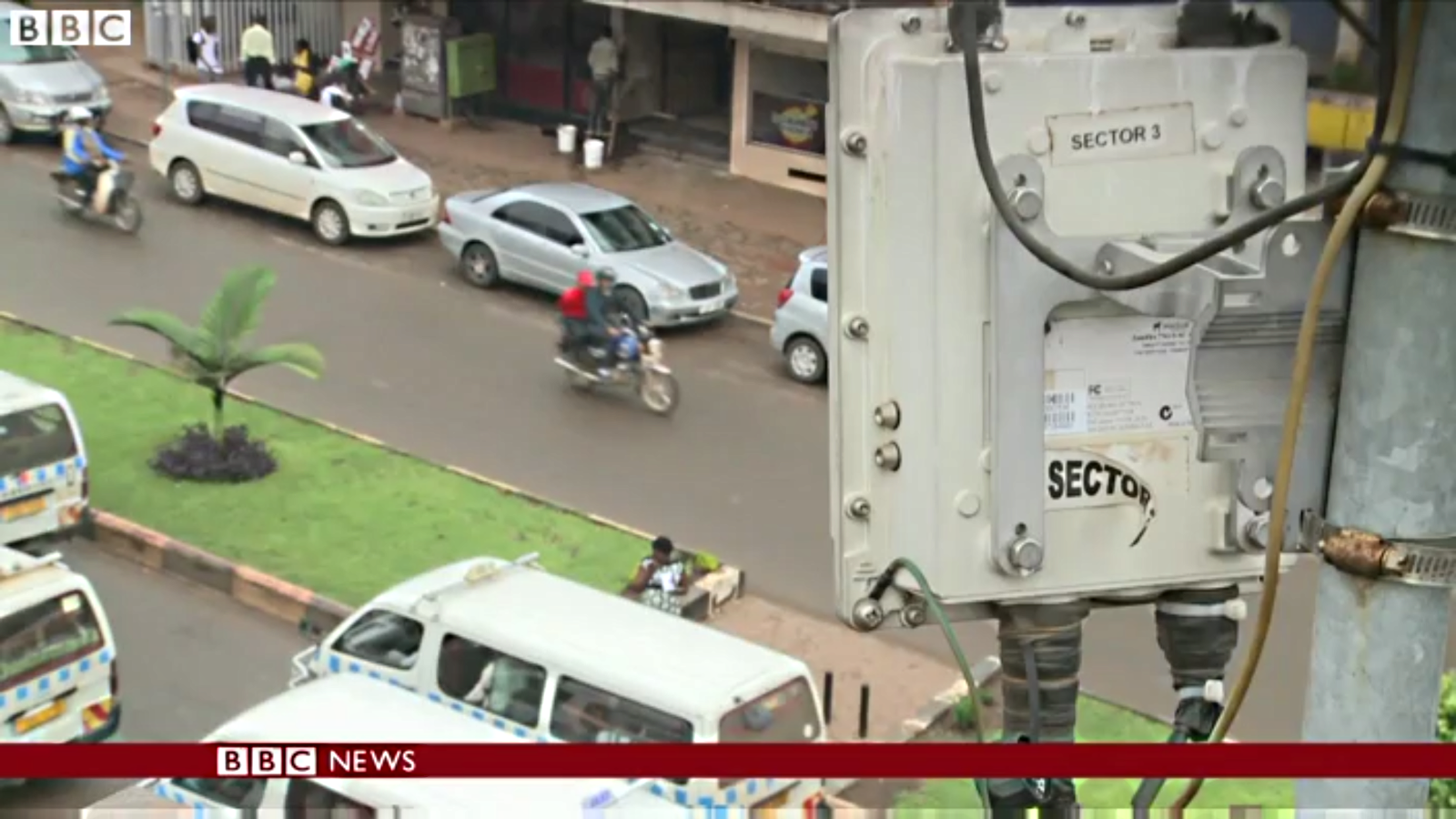
Until now, the wholesale customers have been Internet service providers and mobile operators, but things became a bit more interesting earlier this month, when Google announced that they had deployed a
wholesale WiFi network with 120 public access hotzones in Kampala and more to come. They have signed up their first retail WiFi provider
Roke Telkom.
 |
| Google WiFi antenna on a Kampala rooftop, BBC News |
The service is only a few days old (I could not find mention of it on the Roke Web site), but I found a
first-impression review. The reviewer did not say how many people were online, but the speed was fairly low -- about 100 Kbps. On the other hand, the sign-up process was painlessly handled using his mobile phone and the key "feature" is Roke's flat rate prices: 29 cents per day, $1.44 per week or $5.17 per month.
Well, that is my guess as to what Google proposed -- now for my guess as to why Cuba declined the proposal.
I do not know what ETECSA charges for access to their Havana fiber (or how they price it internally for themselves), but I would be amazed if it were nearly as low as what Google is charging in Africa. But I do know what ETECSA is charging for WiFi access -- about $2 per hour. Two dollars would buy more than a week in Kampala and it would not be necessary to stand in lines or pay scalpers to purchase time.
(You can check out a two-minute BBC News clip on the Fiber backbone and WiFi deployment
here).
I wish Google's proposal was rejected for reasons of political mistrust, because political trust is growing among the Cuban people and distrust will fade, but mistrust seems a less likely cause than fear of competition for ETECSA. As I've said,
I do not understand ETECSA's ownership structure, but I have been assured that it is government controlled. If the Cuban government insists upon protecting ETECSA's profit and maximizing government revenue, Kampala will leave Havana in the dust.
But, it is too soon and too simple to say that Google was turned away because of ETECSA greed.
Kampala has a Google backbone, but it also has competing retailers and there are no competing retailers in Cuba. Attracting retailers to a Google backbone in Havana would require the sort of trust that has developed in Kampala. They would have to be convinced that everyone, including ETECSA retail, would be paying the same price. (I would expect ETECSA retail to do quite well in a competitive Cuban market -- they have assets, employees, Cuban experience, brand recognition, etc.).
It is a lot easier to dig trenches and light fiber than it is to attract retail competitors, and Google may have been rejected because their offer came too soon.
Cuba needs time to plan a very difficult transition in which the roles of ETECSA, national and municipal governments and wholesale and retail connectivity providers are considered. Perhaps they will ultimately decide upon a Kampala-like solution with Google and perhaps other wholesalers operating open, transparent backbones. Another model is that of Stockholm, where the municipal government operates
Stockab, a successful, open, transparent backbone.
 |
Stokab investment and return, millions of Swedish Kronor |
Looking around the world, there are other possibilities. In Singapore, the
government acts as a venture capitalist, investing in Internet service providers.
Of course, Cuba needs connectivity outside of Havana and the world has models for that as well. At least 450 small towns and cities in the US have municipal broadband networks with a variety of ownership and regulation policies -- could Cuba model their success? (Note that the states shown in red on the map below have legal barriers to municipal networks).
India has a much larger rural networking task than Cuba, but Cubans might also study India's
national fiber network, which hopes to reach 250,000 rural villages and offer non-discriminatory access to all service providers.
If the Cuban government is serious about making a transition away from ETECSA's current wholesale/retail monopoly, they need to be working on an infrastructure ownership/regulation plan. We have seen a
leaked executive summary of an infrastructure plan for the next five years, but it is not focused on future technologies or ownership and regulation policies and it was leaked, not openly developed by multiple stakeholders.
Cuba needs to consider alternative infrastructure ownership and regulation policies if they hope to achieve an affordable, modern Internet. Doing so will take political will and time.
The time to start planning is now.